はじめに
Follow this guide to remove and replace the USB-C port assembly in an iPhone 17 Pro.
If you experience intermittent connectivity or charging with the port, you may need to replace the port.
This procedure requires extensive disassembly. Before you replace the USB-C port, try cleaning it out first. Rule out any software culprits or other hardware possibilities.
The USB-C port assembly includes the USB-C port, a microphone, and antennas.
必要な工具と部品
-
-
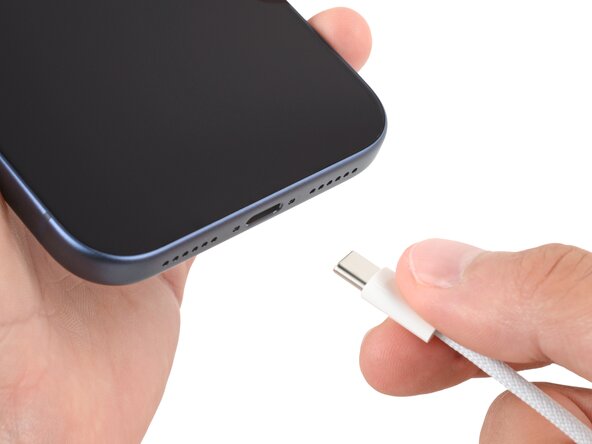
Unplug all cables from your phone.
-
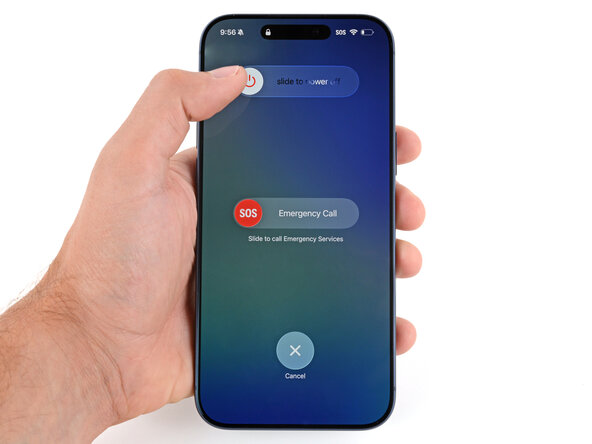
Hold the power and either volume button and slide to power off your phone.
-
-
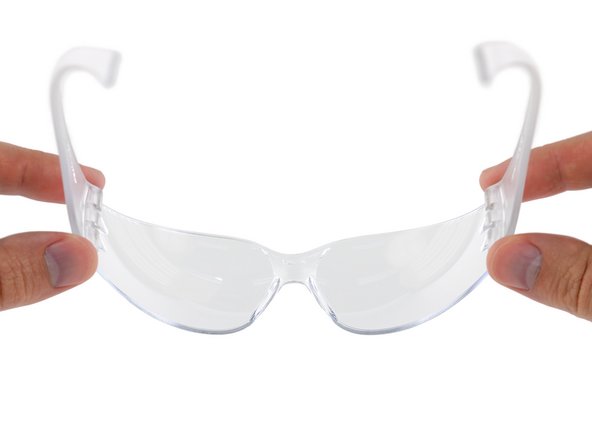
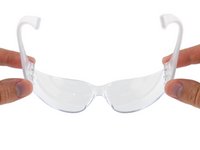
この手順で使用する道具:iFixit Safety Glasses$7.99
-
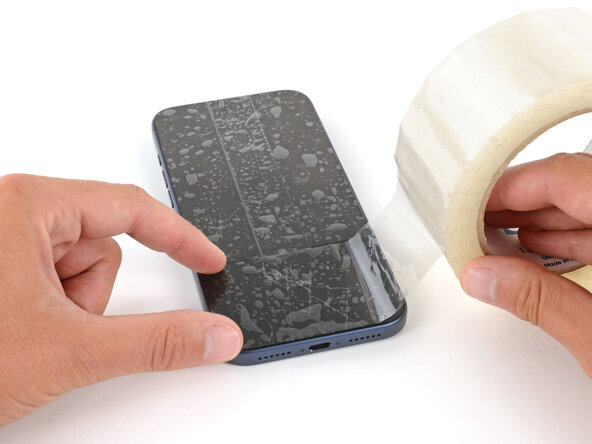
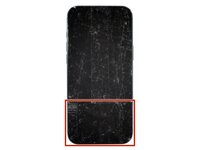
Apply strips of packing tape to the cracked glass until it's completely covered—this will help keep the glass contained and allow the suction cup to stick.
-
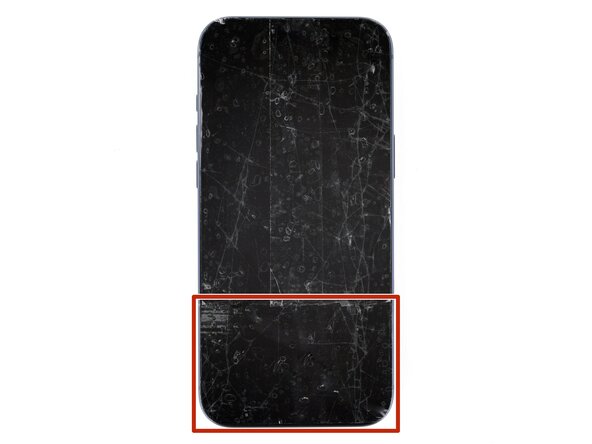
Make sure there's a single strip of tape (not overlapping) across the bottom edge, big enough for a suction cup to fit on.
-
-
-
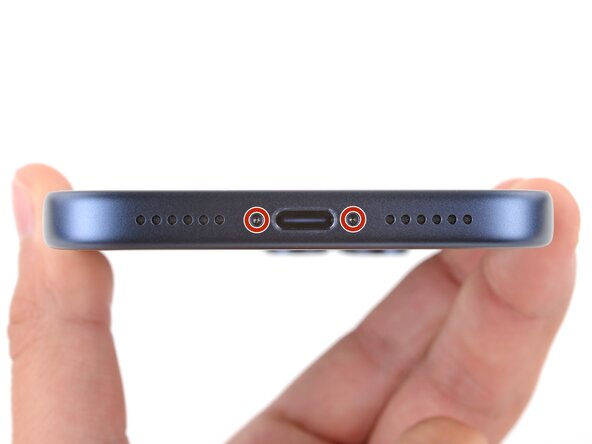
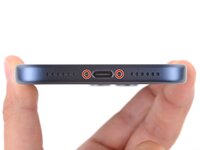
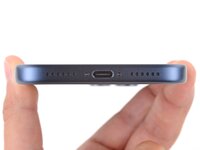
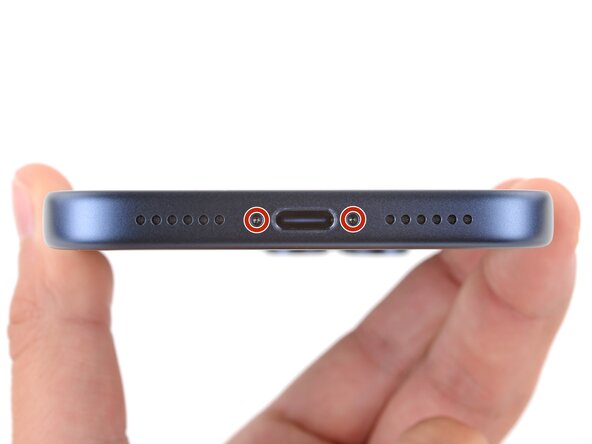
Use a P2 pentalobe screwdriver to remove the two 7.5 mm‑long screws on either side of the charging port.
-
-
-
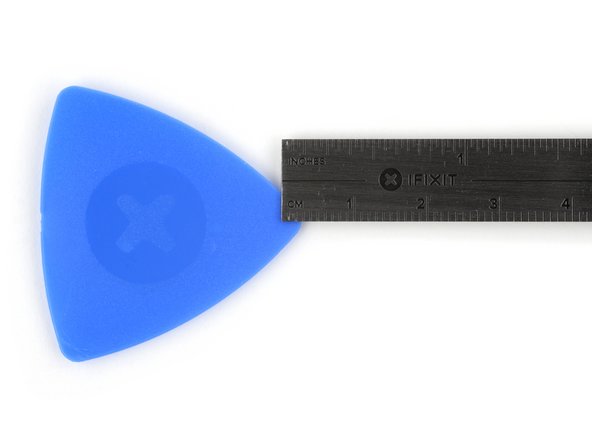
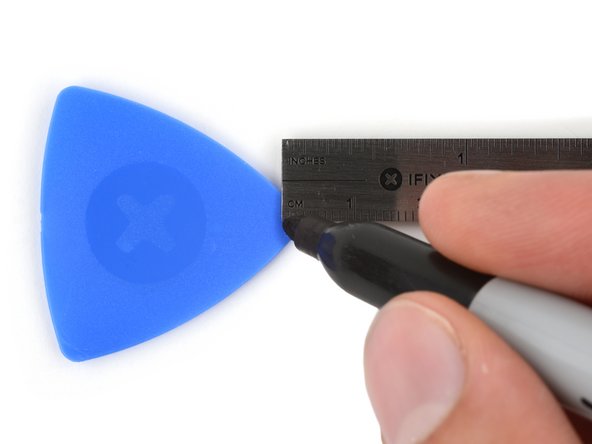
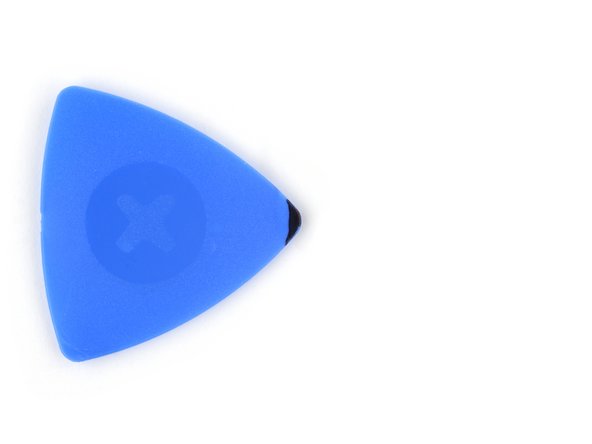
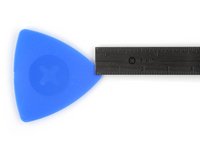
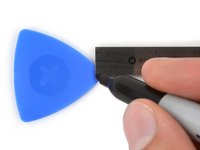
Measure 3 mm from the tip and mark the opening pick with a permanent marker.
-
-
-
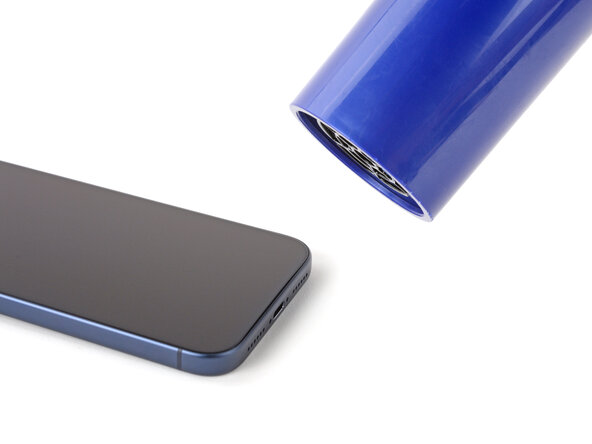
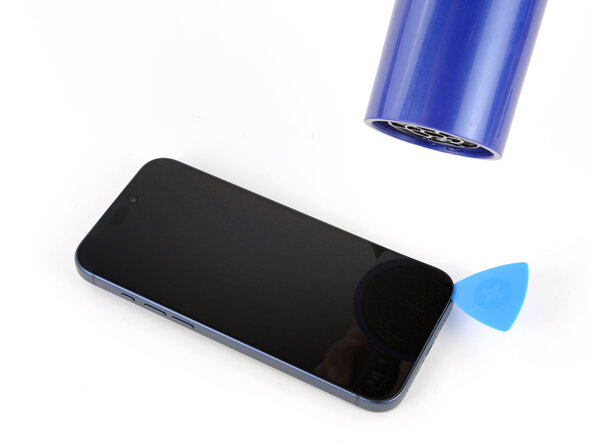
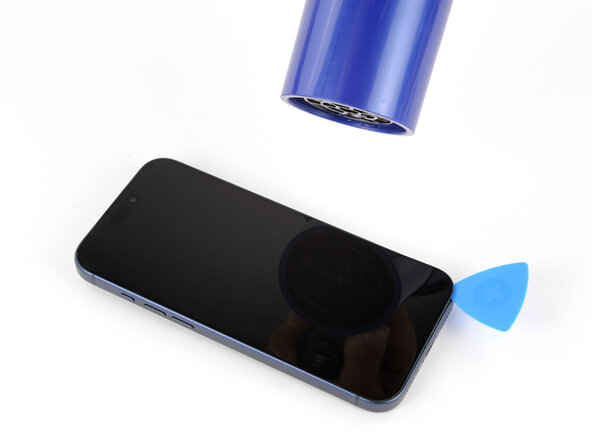
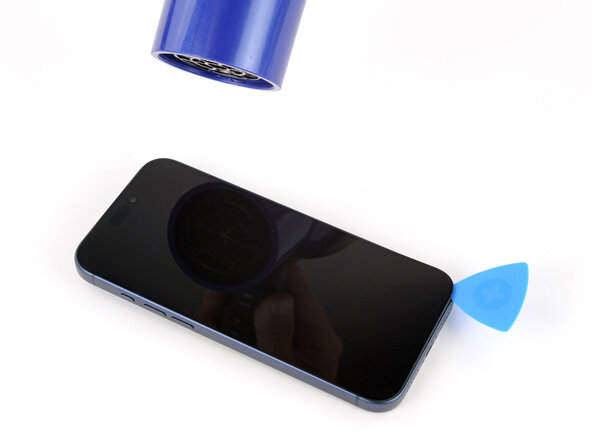
Use a hair dryer or heat gun to heat the bottom edge of the screen until it's slightly too hot to touch.
-
-
-
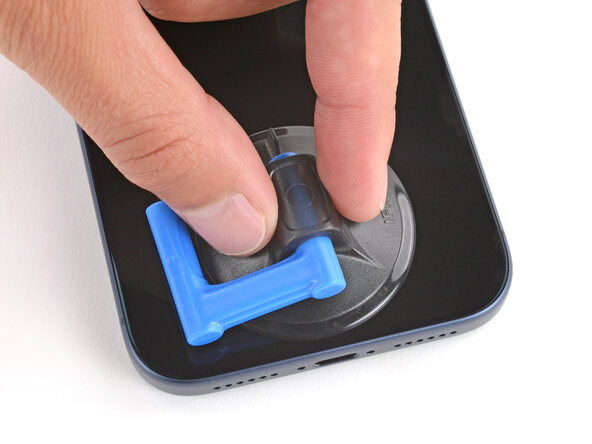
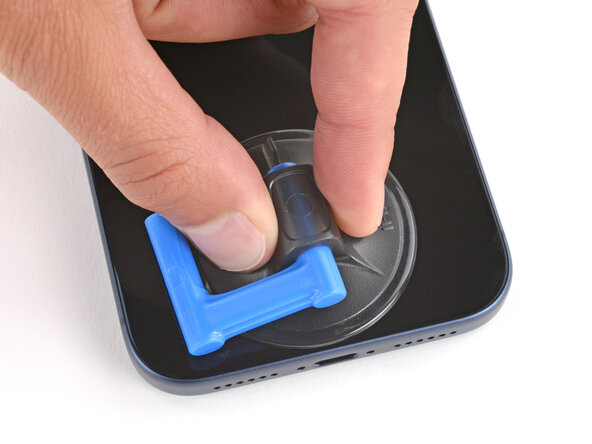
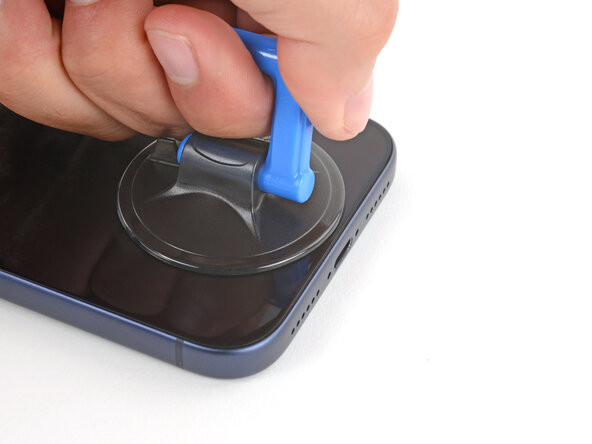
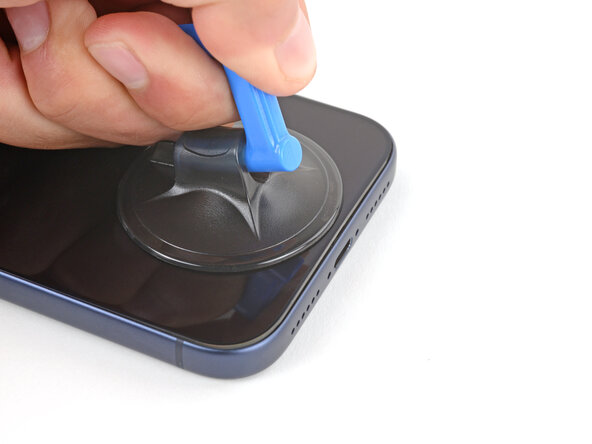
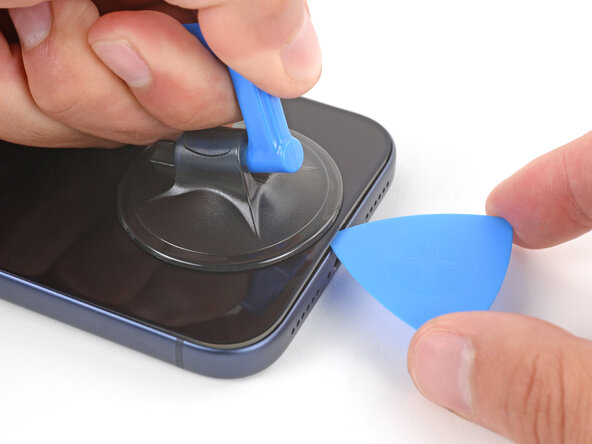
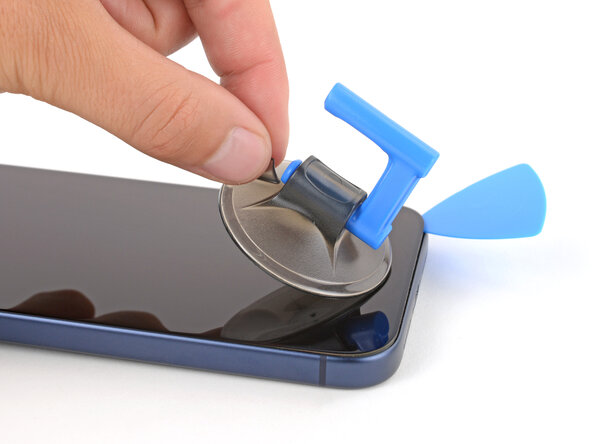
Apply a suction handle to the bottom edge of the screen, as close to the edge as possible.
-
-
-
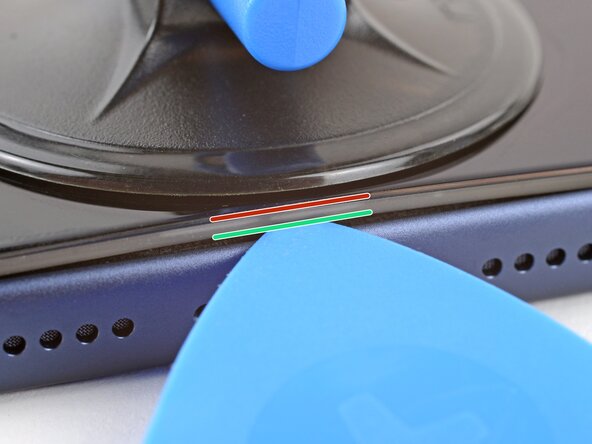
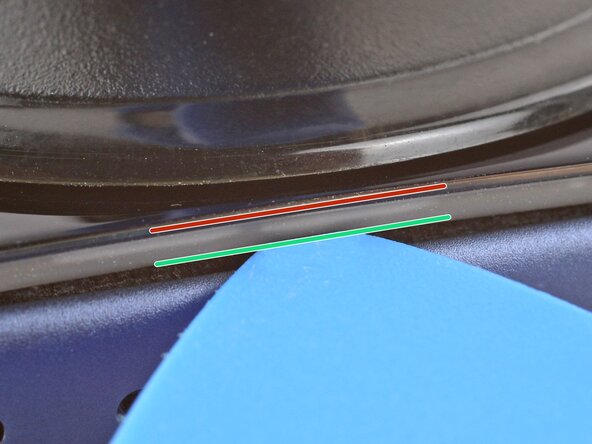
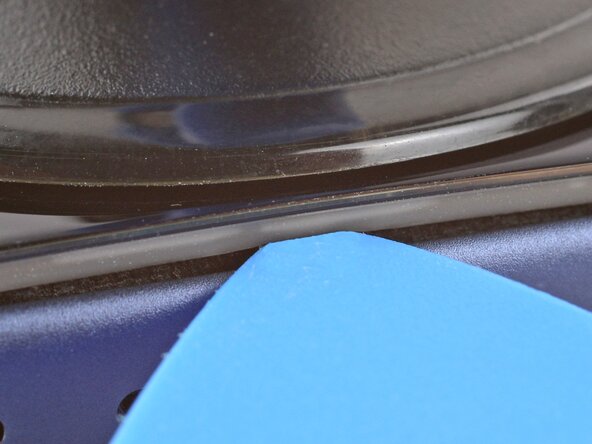
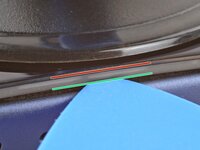
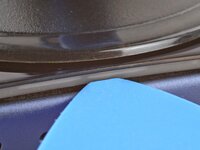
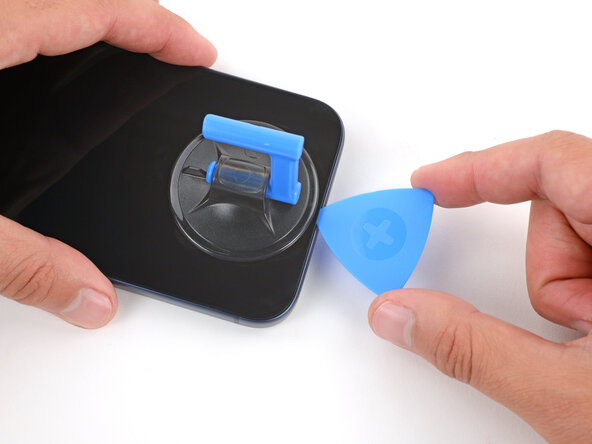
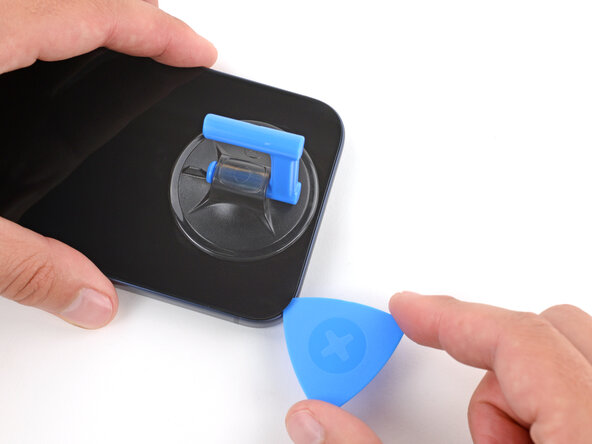
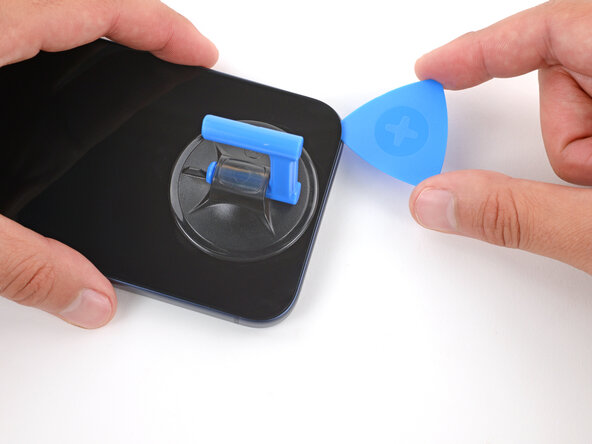
There's a plastic bezel on the underside of the screen that sits on the frame. Insert your pick here, making sure it's completely under the bezel.
-
There's a seam between the plastic bezel and the display panel. Don't insert your pick here or you'll separate the two, complicating the repair.
-
-
-
Pull up on the suction handle with strong, steady force until a gap forms between the screen and frame.
-
Insert the tip of an opening pick in the gap you just created.
-
-
-
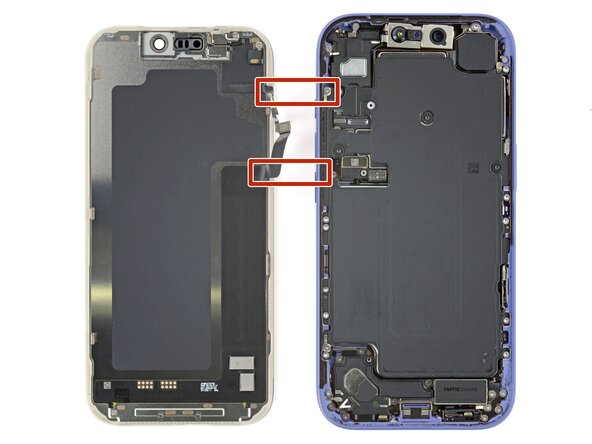
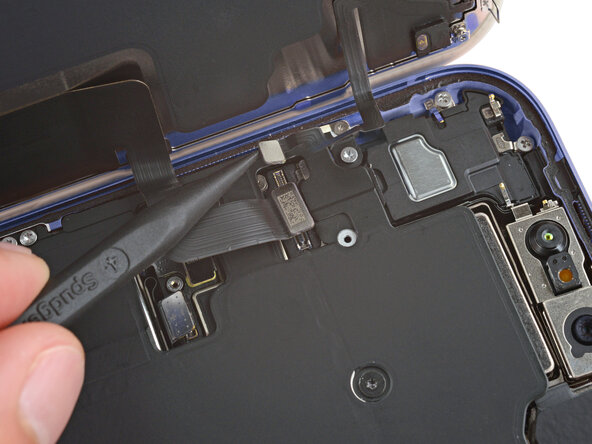
The screen and ambient light sensor cables are located near the volume and Action buttons.
-
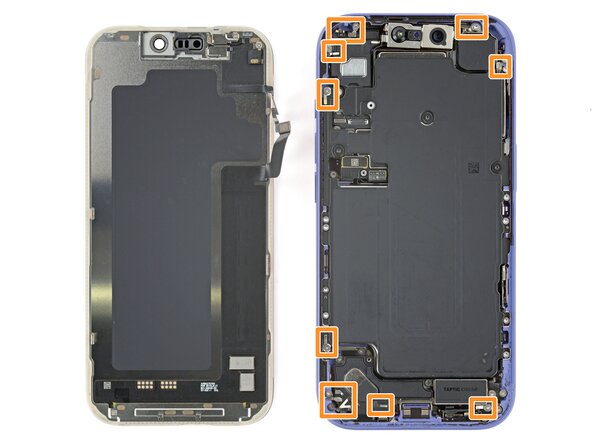
There are delicate spring contacts around the perimeter of the phone.
-
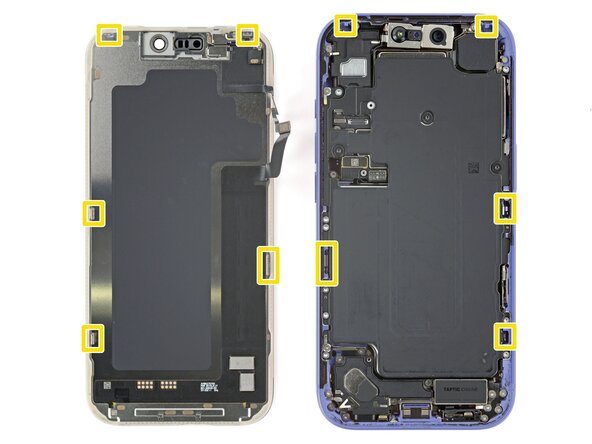
The underside of the screen has thin, metal clips that go into corresponding slots on the frame.
-
-
-
Slide the opening pick along the bottom edge to separate the adhesive.
-
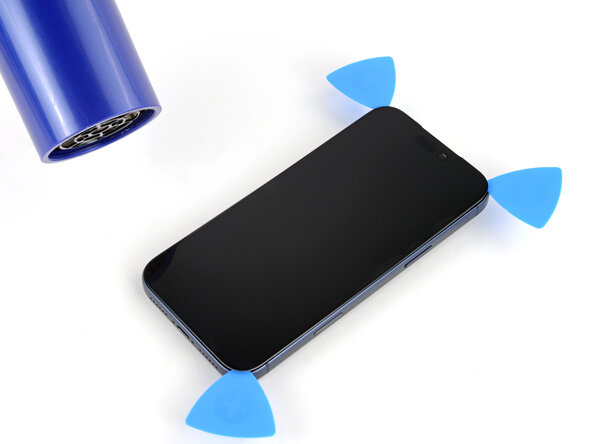
Leave the pick inserted under the bottom right corner to prevent the adhesive from re‑sealing.
-
-
-
Pull the small nub on the suction cup to remove it from the screen.
-
-
-
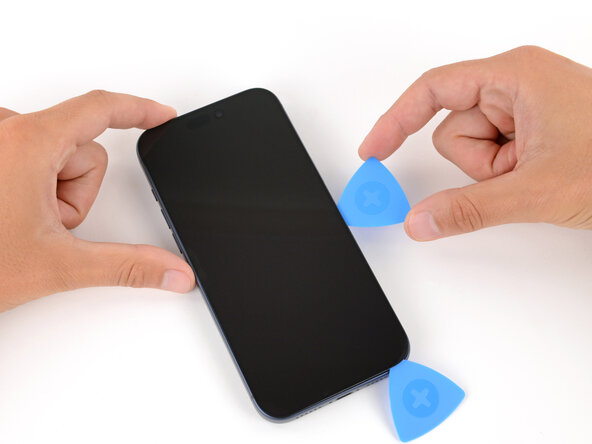
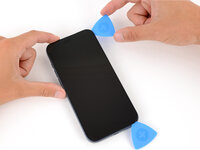
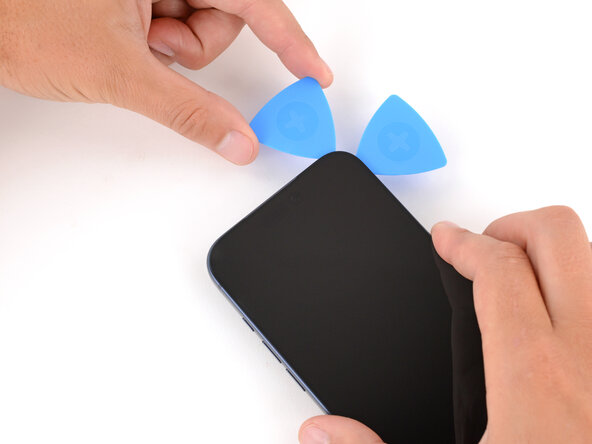
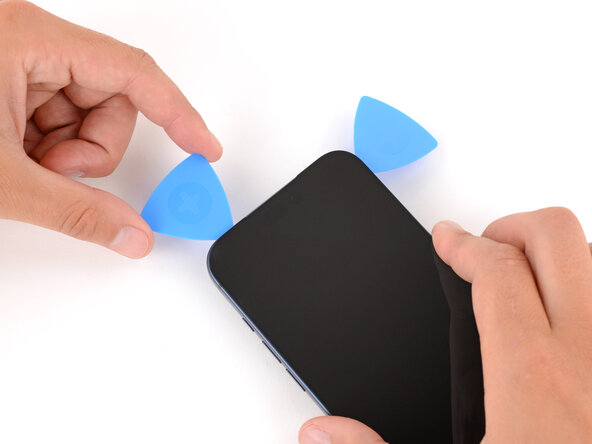
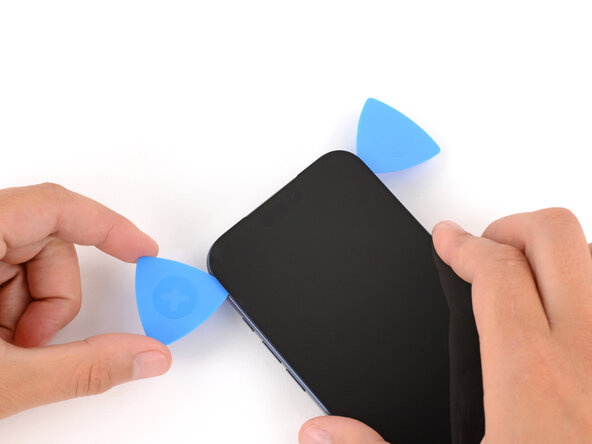
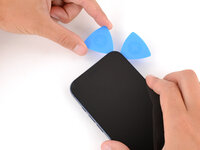
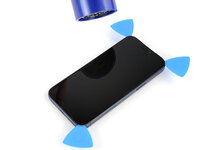
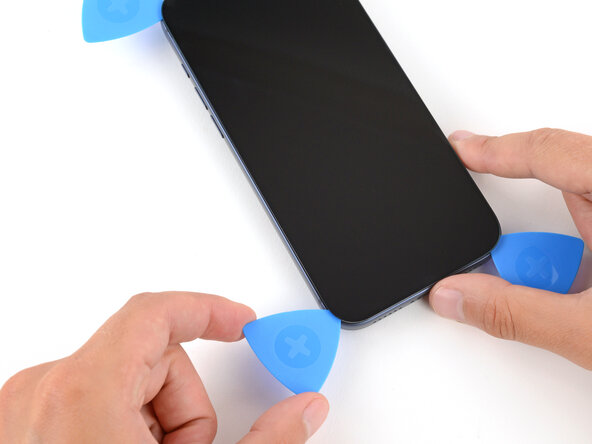
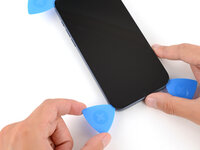
Insert a second opening pick under the bottom right corner of the screen.
-
Slide the pick up the right edge to separate the adhesive and release the two clips.
-
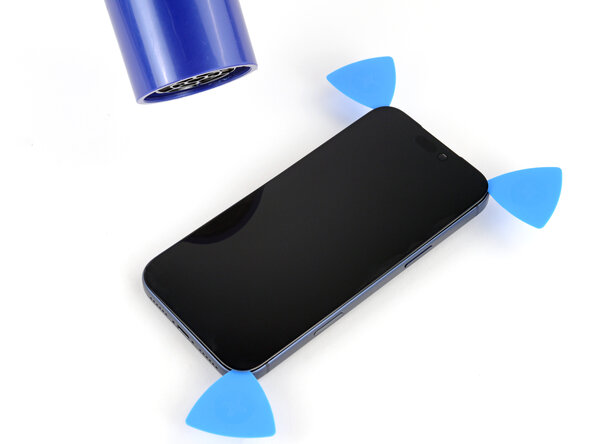
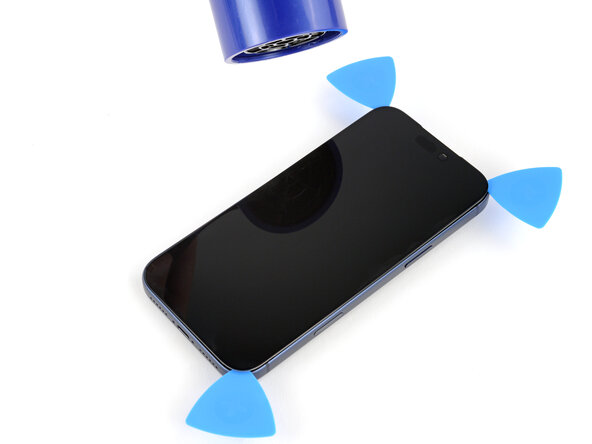
Leave the pick inserted under the top right corner to prevent the adhesive from re‑sealing.
-
-
-
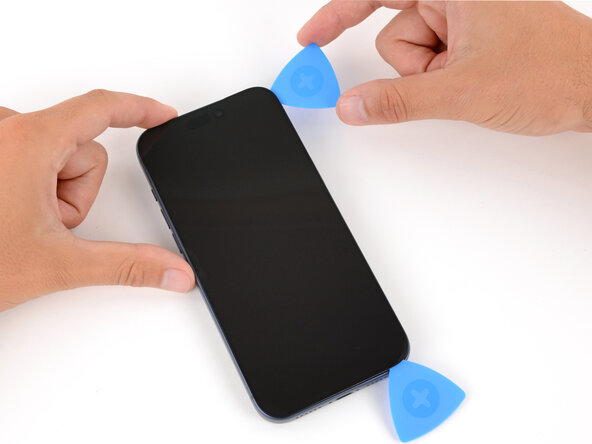
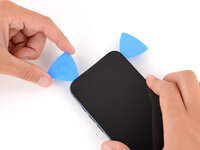
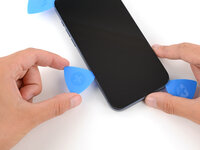
Insert a third opening pick under the top right corner of the screen.
-
Slide the pick along the top edge and just barely around the top left corner to separate the adhesive and release the two clips.
-
Leave the pick inserted under the top left corner to prevent the adhesive from re‑sealing.
-
-
-
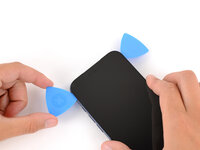
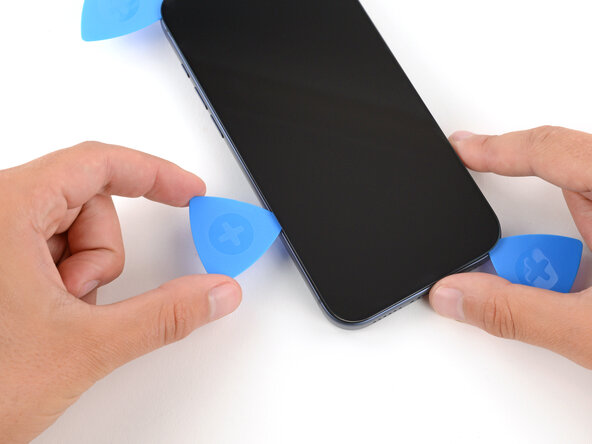
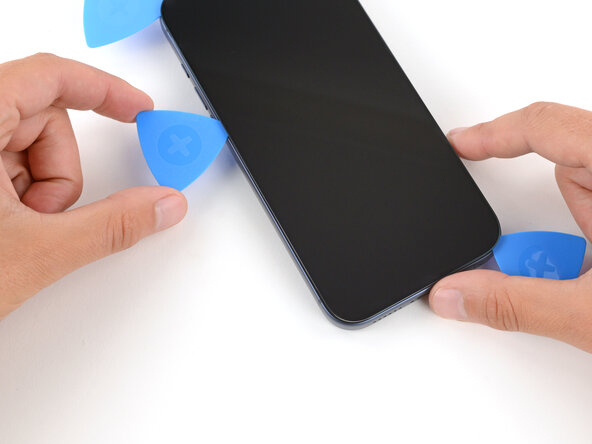
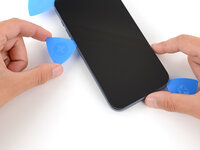
Insert a fourth opening pick under the bottom left corner of the screen.
-
Slide the pick up the right edge to separate the adhesive and release the clip, stopping just before the volume up button.
-
-
-
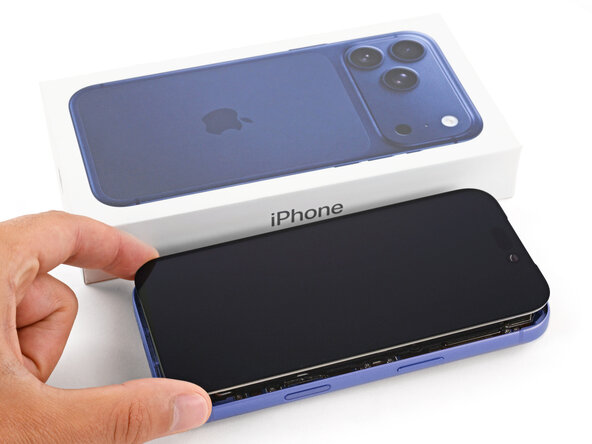
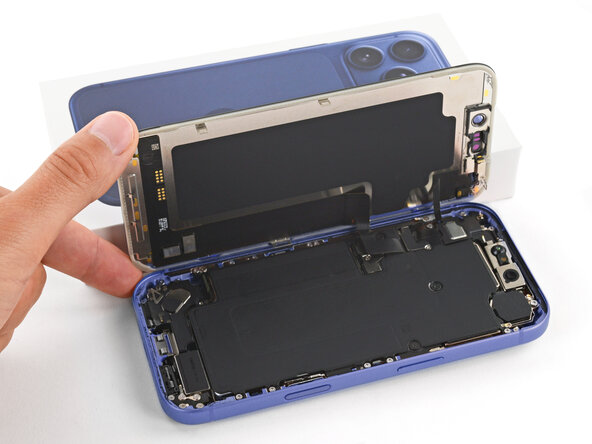
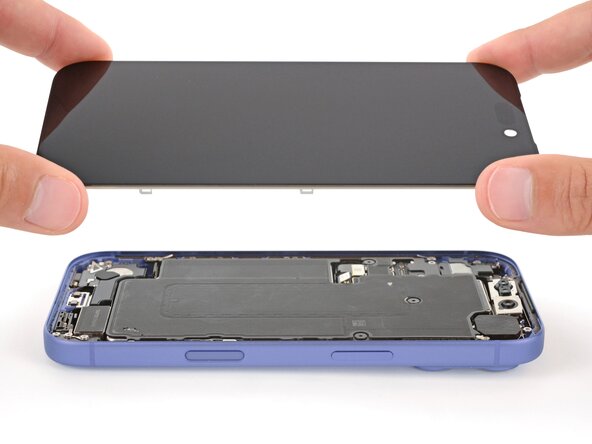
Lift the screen straight up and swing it over the left edge, propping it up against a sturdy box or stack of books so the cables aren't strained.
-
-
この手順で使用する道具:FixMat$36.95
-
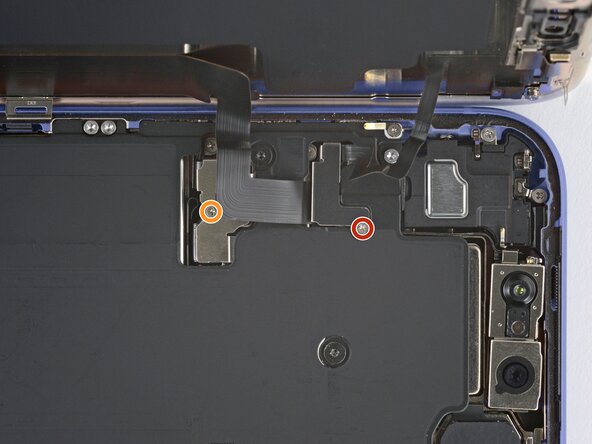
Use a JIS 00 screwdriver to remove the two screws securing the cable covers:
-
One 1.4 mm‑long screw for the screen and front sensor cable cover
-
One 1.3 mm‑long screw for the battery cover
-
-
-
Use the point of a spudger to pry up and disconnect the battery press connector.
-
-
-
Use the tip of an opening pick or the point of a spudger to pry up and disconnect the screen and ambient light sensor press connectors.
-
-
-
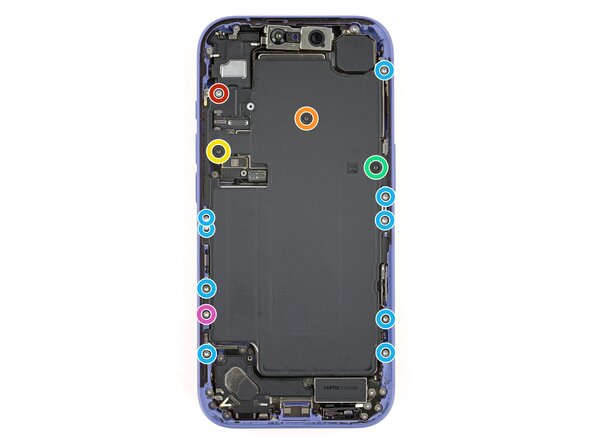
Use a Torx Plus 4IP screwdriver to remove the screws securing the battery tray:
-
One 7.5 mm‑long screw
-
One 5.9 mm‑long screw
-
One 3.4 mm‑long screw
-
One 2.3 mm‑long screw
-
Nine 3.7 mm‑long screws
-
One 3.7 mm‑long screw
-
-
-
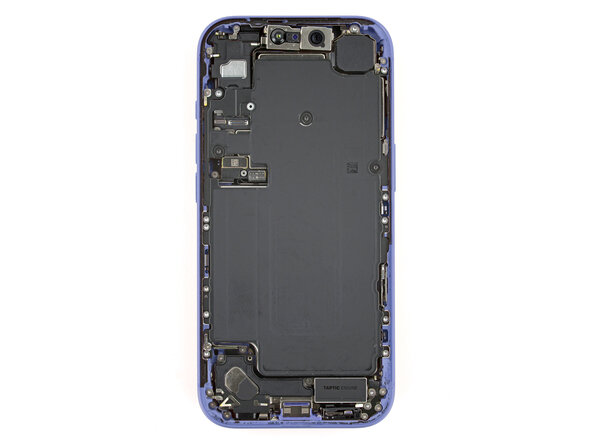
Use your finger to lift the top left corner of the battery tray and remove it.
-
-
-
Slide the tip of an opening pick along the top edge of the Taptic Engine to separate the plastic buffer strip adhered to it.
-
-
-
Use a JIS 00 screwdriver to remove the six screws securing the loudspeaker:
-
Two 2.7 mm‑long screws
-
Two 2.0 mm‑long screws
-
One 1.5 mm‑long screw
-
One 1.5 mm‑long screw attached to the bottom edge
-
-
-
Use a JIS 00 screwdriver to remove the two 2.0 mm‑long screws securing the ground clip.
-
-
-
Use a JIS 00 screwdriver to remove the three 2.0 mm‑long screws securing the flex antenna.
-
-
-
Use a standoff screwdriver to remove the two 4.0 mm‑long screws securing the Taptic Engine.
-
-
-
-
Use the point of a spudger to pry up and disconnect the lower microphone connector.
-
-
-
Use a hair dryer or an iOpener to heat the bottom-right corner of the iPhone until it's warm to the touch.
-
-
-
Insert the point of an opening pick between the lower microphone and the frame.
-
Slide the pick along the edge to create a gap between the microphone and the frame.
-
-
-
Use the point of a spudger to pry up and disconnect the two USB-C port assembly press connectors (one's underneath the other) from the bottom-left corner of the logic board.
-
-
-
Remove the screws securing the USB-C port assembly:
-
Three 1.5 mm‑long JIS 00 screws
-
Two 1.7 mm‑long JIS 00 screws
-
One 1.3 mm‑long JIS 00 screw
-
One 1.2 mm‑long tri-point Y000 screw
-
-
-
Use a hair dryer or an iOpener to heat the entire USB-C port assembly until it's warm to the touch.
-
-
-
Slide the point of an opening pick between the microphone module (left of the USB-C port) and the bottom edge of the frame.
-
Pry gently to separate the microphone from the frame.
-
-
-
Slide the opening pick under the USB-C port assembly, near the center.
-
Slide the pick towards the right edge of the frame to separate the adhesive holding the assembly.
-
-
-
Carefully inspect your replacement USB-C port assembly and remove any adhesive liners.
-
Align the assembly with the bottom edge of the frame and lay it loosely in place.
-
Make sure the assembly tucks below the black plastic speaker channel.
-
-
-
Use your finger to press and connect the two USB-C port assembly press connectors (one's underneath the other) to the logic board.
-
-
-
Use tweezers to remove the microphone adhesive gasket from the frame.
-
-
-
Use tweezers to align the microphone with the frame.
-
Slide the microphone into its recess and press it in place. There should be almost no gap between the microphone and the frame.
-
-
-
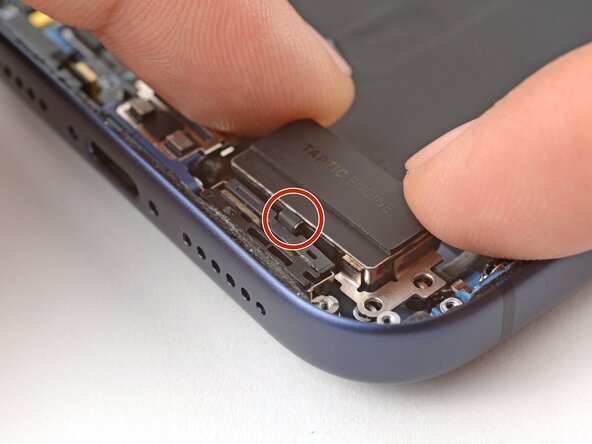
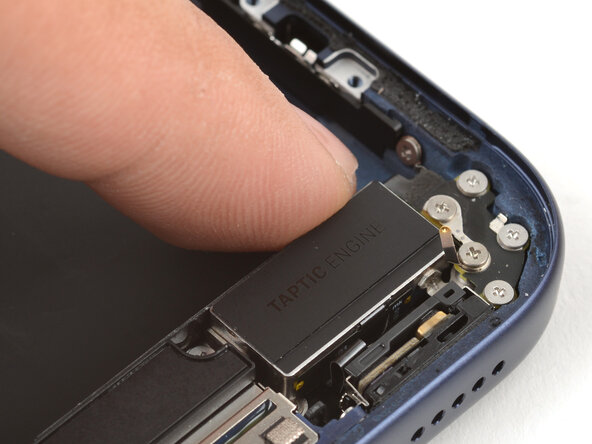
Place the Taptic Engine upside down on the edge of the iPhone frame.
-
While holding the Taptic Engine with one hand, use your finger to press and connect the Taptic Engine press connector.
-
-
-
Use your fingers or a spudger to fold the flex antenna down in place.
-
-
-
Use a JIS 00 screwdriver to install the two 2.0 mm‑long ground clip screws.
-
-
-
Align the bottom edge of the loudspeaker with the frame and lay it in its recess.
-
Make sure the bottom-right screw tab seats properly against the frame. Gently bend it if it's out of place.
-
Use your finger to press down on the loudspeaker until it clicks in place.
-
-
-
Use your fingers or a spudger to press the buffer strip back onto the top edge of the Taptic Engine.
-
-
-
Use a Torx Plus 4IP screwdriver to install the battery tray screws:
-
One 7.5 mm‑long screw
-
One 5.9 mm‑long screw
-
One 3.4 mm‑long screw
-
One 2.3 mm‑long screw
-
Nine 3.7 mm‑long screws
-
One 3.7 mm‑long screw
-
-
この手順で使用する道具:Tweezers$4.99
-
Use tweezers or your fingers to remove large pieces of adhesive from the frame perimeter.
-
Use a spudger to scrape the adhesive residue off the frame.
-
-
この手順で使用する道具:Microfiber Cleaning Cloths$3.99
-
If you're reusing your screen, apply a few drops of highly-concentrated isopropyl alcohol (over 90%) to a microfiber or lint-free cloth and wipe around the perimeter to prepare the surface for new adhesive.
-
-
-
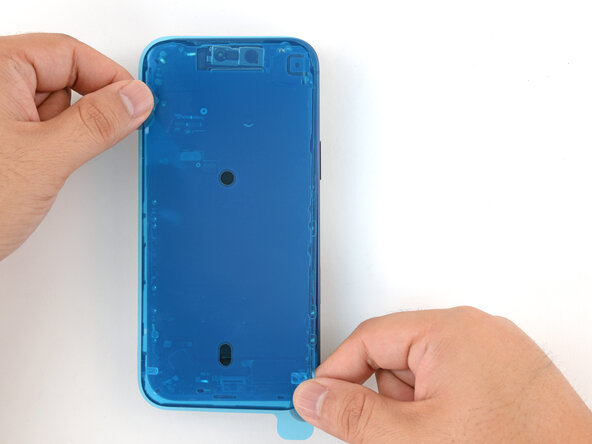
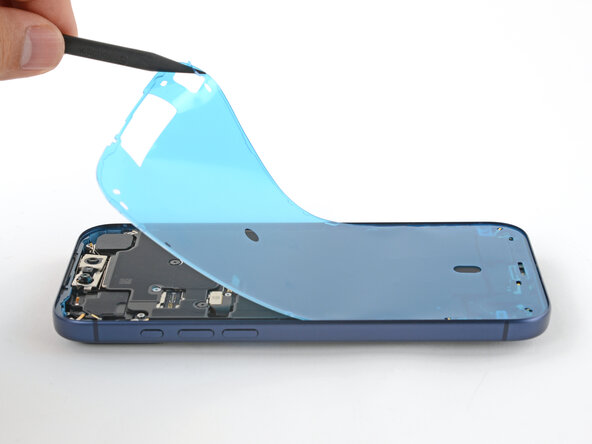
Without peeling any liners, lay the adhesive sheet over the frame to determine its proper orientation.
-
-
-
Grab the tab in the corner of the adhesive sheet and peel the liner to expose a third of the adhesive.
-
-
-
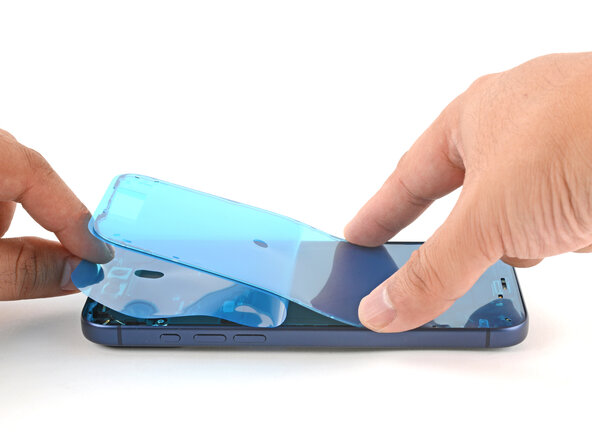
Use the pull tab to peel off the large front liner from the adhesive. The pull tab is often in a corner of the liner.
-
At this point, you'll still have liners covering the perimeter. Don't remove these liners yet—they prevent the adhesive from accidentally sticking while you reassemble your iPhone.
-
-
-
Set the iPhone screen next to the frame such that the screen cables can comfortably reach the logic board.
-
-
-
Use your finger or the flat end of a spudger to press and connect the battery connector onto the logic board.
-
-
-
This is a good point to test your repair before sealing up your iPhone. Power on your iPhone and make sure it works as expected. Power it back down and continue reassembly.
-
-
-
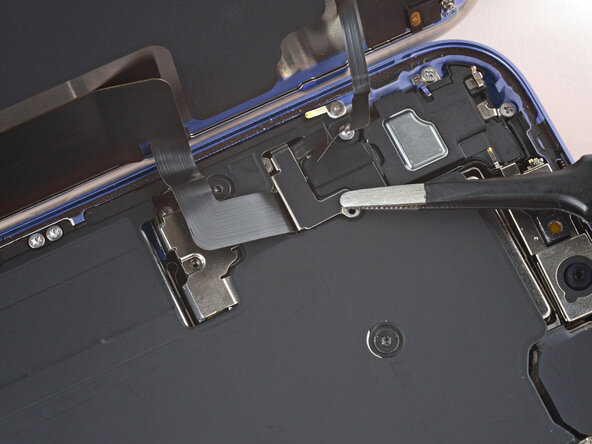
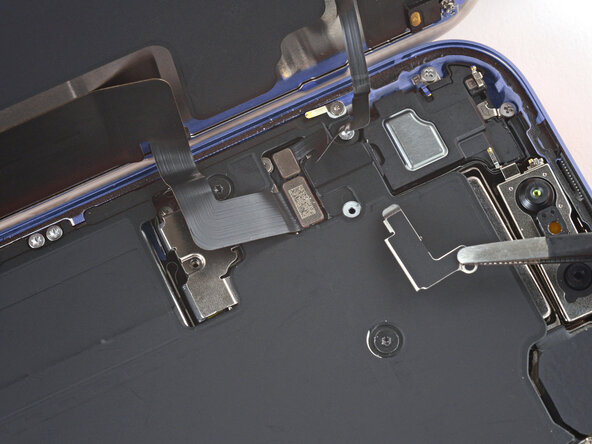
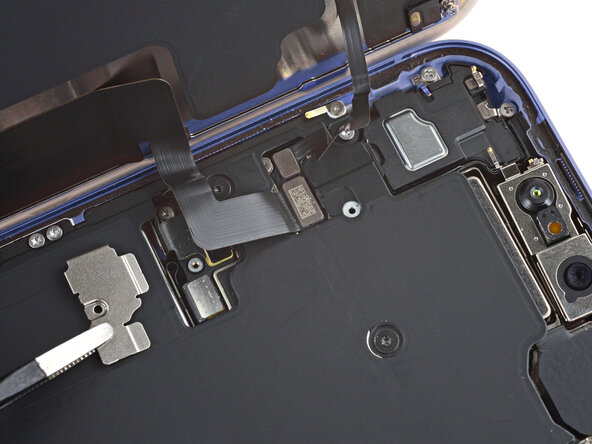
Tuck the top edge of the battery connector cover under the cutout lip.
-
Align the cover by its screw hole and lay it in place.
-
-
-
Tuck the left edge of the screen connector cover under the cutout lip.
-
Align the cover by its screw hole and lay it in place.
-
-
-
With one hand hold the screen steady.
-
Use your fingers or a spudger to peel away all perimeter liners, exposing the adhesive.
-
Check the internals for any stray liners and remove them. There should be no liners remaining.
-
-
-
Lower the screen onto the frame, beginning with the top edge.
-
Press along the edges of the iPhone until the screen sits flush against the frame.
-
-
-
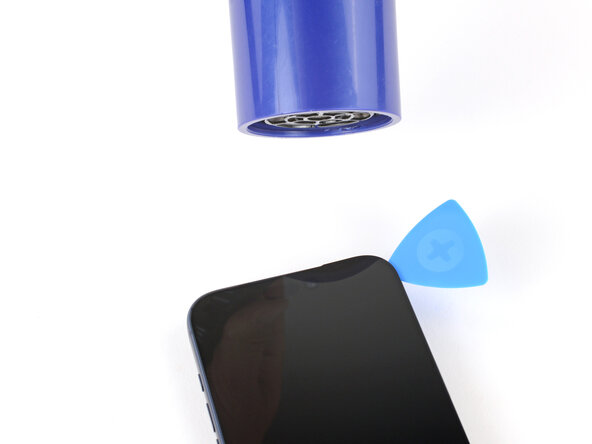
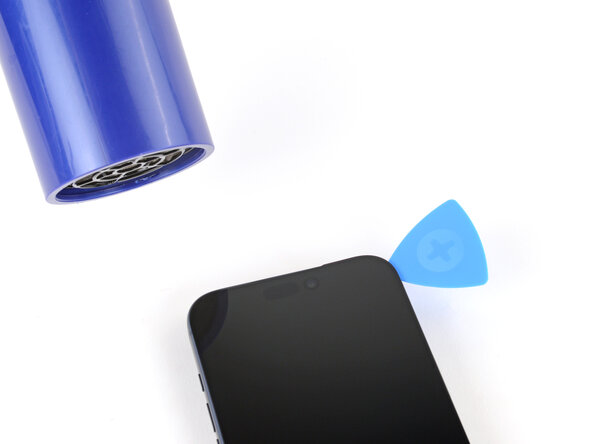
Use a hair dryer or a heat gun to heat the screen perimeter until it's slightly too hot to touch.
-
-
-
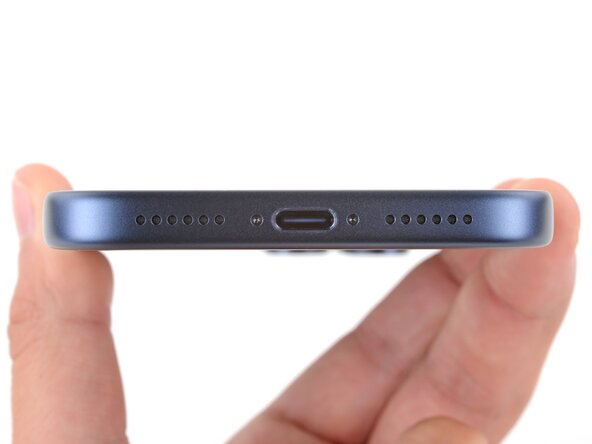
Use a P2 pentalobe screwdriver to install the two 7.5 mm‑long screws on either side of the charging port.
-

















Take your e-waste to an R2 or e-Stewards certified recycler.
Repair didn’t go as planned? Try some basic troubleshooting, or ask our Answers community for help.


